What is the Difference Between Industrial and Flex Real Estate? A Guide to Commercial Property Investment

Commercial real estate, with its myriad of categories and terminologies, can often seem complex. Two terms, ‘Industrial Real Estate‘ and ‘Flex Real Estate,’ are frequently encountered yet often misunderstood.
This guide aims to decipher these terms, providing clarity and actionable insights for Commercial Property Investment enthusiasts, business owners, and aspiring investors. By distinguishing the unique characteristics and applications of these property types, readers can make informed Commercial Property Investment decisions, optimize operations, and spot potential investment opportunities in the vibrant Oklahoma real estate market.

WHAT IS AN INDUSTRIAL PROPERTY?
An industrial property is like a giant workshop or a big storage room. It’s a place where people make things, store things, and send them out to other places. Imagine a large building where toy cars are made (that’s a manufacturing facility), or a huge room full of boxes of toys waiting to be delivered to toy stores (that’s a warehouse), or a place where all the parcels are sorted before they’re sent to different homes (that’s a distribution center).
Some industrial places are also like big computer rooms (called data centers) where companies like Google and Microsoft keep their computers that make the internet work.
SPECIFIC TYPES OF INDUSTRIAL REAL ESTATE:
Warehouses: Large buildings typically used for storing goods. For example, e-commerce giants like Amazon utilize extensive warehouses for inventory storage before dispatching goods to customers.
Manufacturing Facilities: These buildings are geared for the production of goods. Companies like General Motors have vast industrial properties dedicated to the assembly and production of cars.
Distribution Centers: Strategically positioned facilities where goods are received and shipped out, they act as the connecting point between the manufacturer and the retailer or consumer. Courier services like FedEx operate numerous distribution centers where they sort and dispatch packages.
Data Centers: Modern industrial properties also includes data centers – facilities housing computer servers and related equipment. Tech firms like Google and Microsoft maintain global networks of data centers to manage and distribute their digital services.
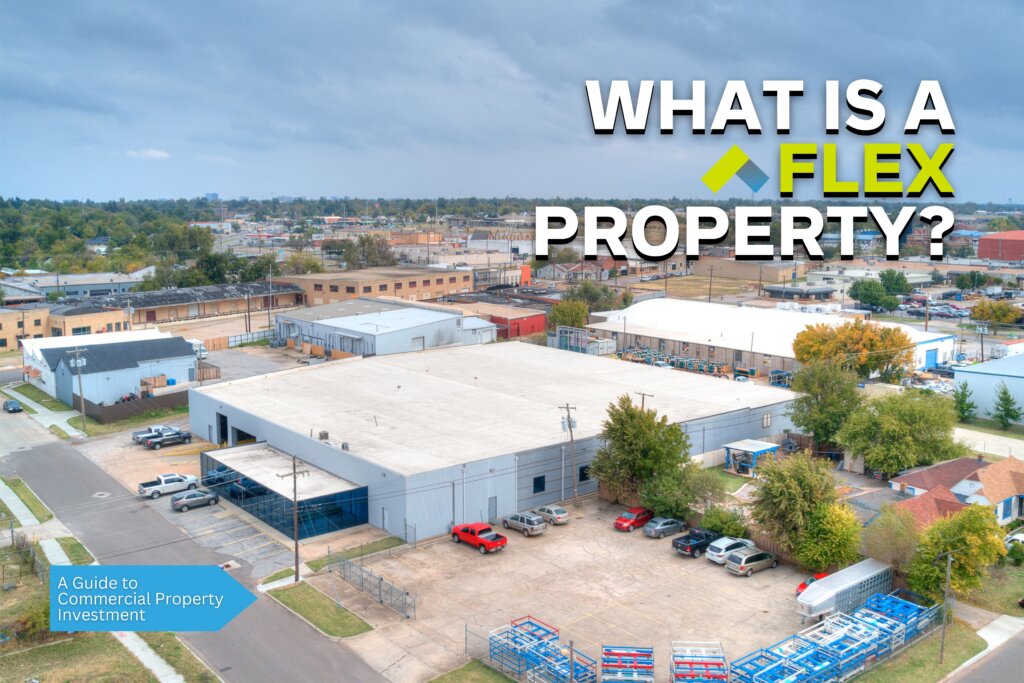
WHAT IS A FLEX PROPERTY?
A Flex property is like a Lego set – you can change it around to suit what you need. It’s a place that can be part office, part workshop, and part storage room. Imagine you’re running a small company that creates custom T-shirts. You might need a space where you can talk to customers and take orders (that’s your office), another space where you design and print the shirts (that’s your light industrial or workshop space), and a place where you keep all the shirts before they’re sold (that’s your storage or warehouse space). A flex space allows you to have all of this in one building!
SPECIFIC TYPES OF FLEX REAL ESTATE
Tech Startups: Startups may need office space for developers, light manufacturing area for prototyping, and storage area for ready-to-ship devices. A flex space can accommodate all these needs within one location.
Photography Studios: Photographers need office space for administrative tasks, studio space for shoots, and storage for their equipment. A flex space provides all of this without the need for separate rentals.
Fitness Centers: Fitness centers often require office space for management, open spaces for gym equipment, and even warehouse-style space for classes or storage. Flex spaces can efficiently meet these requirements.
Specialty Retailers: A specialty retailer, like a bicycle shop, may need a showroom for customers, an office for administration, and a repair and assembly workshop. Flex space can accommodate all these needs under one roof.

KEY DIFFERENCES BETWEEN INDUSTRIAL AND FLEX REAL ESTATE
Usage: Industrial space is primarily intended for single-purpose industrial use such as manufacturing or warehousing. Flex real estate, on the other hand, can cater to a combination of uses, like office space, light manufacturing, and warehousing within the same property.
Design: Industrial properties are designed to accommodate heavy machinery, equipment, and inventory, with less emphasis on aesthetic appeal. Conversely, flex spaces blend elements of industrial and office spaces, with a more finished interior suitable for public-facing activities.
Location: Industrial properties are typically located in industrial zones or close to transportation hubs, optimizing logistics and distribution. Flex spaces are often found in business or industrial parks and are conveniently located to benefit multiple types of businesses.
Tenant Profile: Industrial spaces are ideal for businesses that require manufacturing, storage, or distribution capabilities, such as e-commerce companies, logistics providers, and manufacturers. Flex spaces, on the other hand, cater to businesses needing a mix of office and light industrial or warehouse space, such as tech startups, design firms, or smaller distribution companies.
FINAL THOUGHTS
while industrial real estate caters to specific, often heavier commercial uses centered around manufacturing, warehousing, and distribution, flex real estate offers versatility and can be adapted to a mix of commercial uses.
This understanding of their unique characteristics can guide readers in making informed decisions, optimizing business operations, and uncovering potential investment opportunities in the dynamic world of commercial real estate.
Now that you’re equipped with a clear understanding of industrial and flex real estate, are you ready to explore the possibilities these property types can offer for your business or investment portfolio? Our team at Bois Commercial Real Estate is here to assist you.
We’re experts in the Oklahoma commercial real estate market and can help guide you through your next property acquisition or lease. Don’t hesitate to reach out to us at 405-296-2015. We look forward to helping you make your next big commercial real estate move!


Comments
Post a Comment